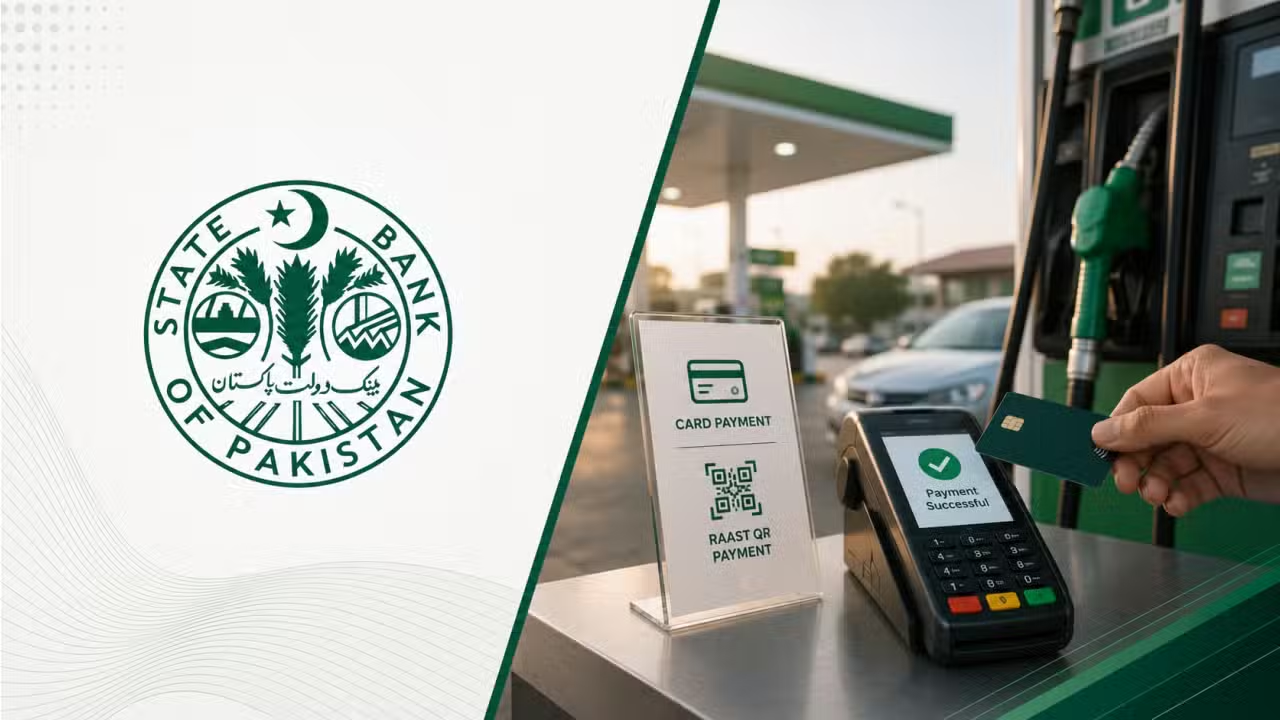
The State Bank of Pakistan (SBP) has announced a new set of measures aimed at accelerating digital payments at fuel stations across the country. The initiative introduces lower transaction costs for card payments and expands the use of Raast QR payments, making cashless fuel purchases more convenient for consumers and businesses alike.
The latest framework is part of the central bank’s broader strategy to promote a digital economy, reduce reliance on cash, and encourage secure, efficient payment methods throughout Pakistan’s retail sector.
Under the new policy, the Merchant Discount Rate (MDR) for debit and credit card transactions at petrol pumps has been capped at Rs. 1 per litre. The move is expected to reduce payment processing costs for fuel station operators while encouraging greater acceptance of card-based transactions.
In addition, the Interchange Reimbursement Fee (IRF) for fuel and related product purchases has been limited to Rs. 0.20 per litre. By lowering these charges, the SBP aims to remove financial barriers that have traditionally discouraged merchants from accepting digital payments.
The central bank has also directed commercial banks to work closely with petrol pump operators to expand the availability of Raast QR payment facilities. This initiative will allow customers to make instant digital payments by simply scanning a QR code using their mobile banking applications or participating digital wallets.
Raast, Pakistan’s instant payment system, has become a key pillar of the country’s digital financial infrastructure. Its QR-based payment solution enables real-time transfers without requiring physical cards or cash, offering consumers a fast, secure, and user-friendly payment experience.
The expansion of Raast QR acceptance at fuel stations is expected to improve payment convenience while supporting financial inclusion. More customers will have access to digital payment options regardless of whether they carry cash or payment cards.
For fuel retailers, the new framework offers an opportunity to modernize payment systems while benefiting from reduced transaction costs. Increased digital payment adoption can also improve operational efficiency, minimize cash handling risks, and enhance transaction transparency.
Industry experts believe the policy could significantly increase electronic payment volumes in Pakistan’s fuel retail sector. Petrol stations are among the country’s busiest retail outlets, making them an ideal platform for expanding digital payment usage on a large scale.
The initiative also aligns with Pakistan’s ongoing efforts to strengthen the digital economy by encouraging businesses and consumers to adopt modern financial technologies. As digital payment infrastructure continues to grow, customers can expect quicker, safer, and more seamless payment experiences across everyday transactions.
With lower transaction fees and broader Raast QR availability, the State Bank of Pakistan is taking another important step toward building a more inclusive and digitally connected financial ecosystem. The success of the initiative will largely depend on effective collaboration between banks, fuel station operators, and payment service providers in the months ahead.