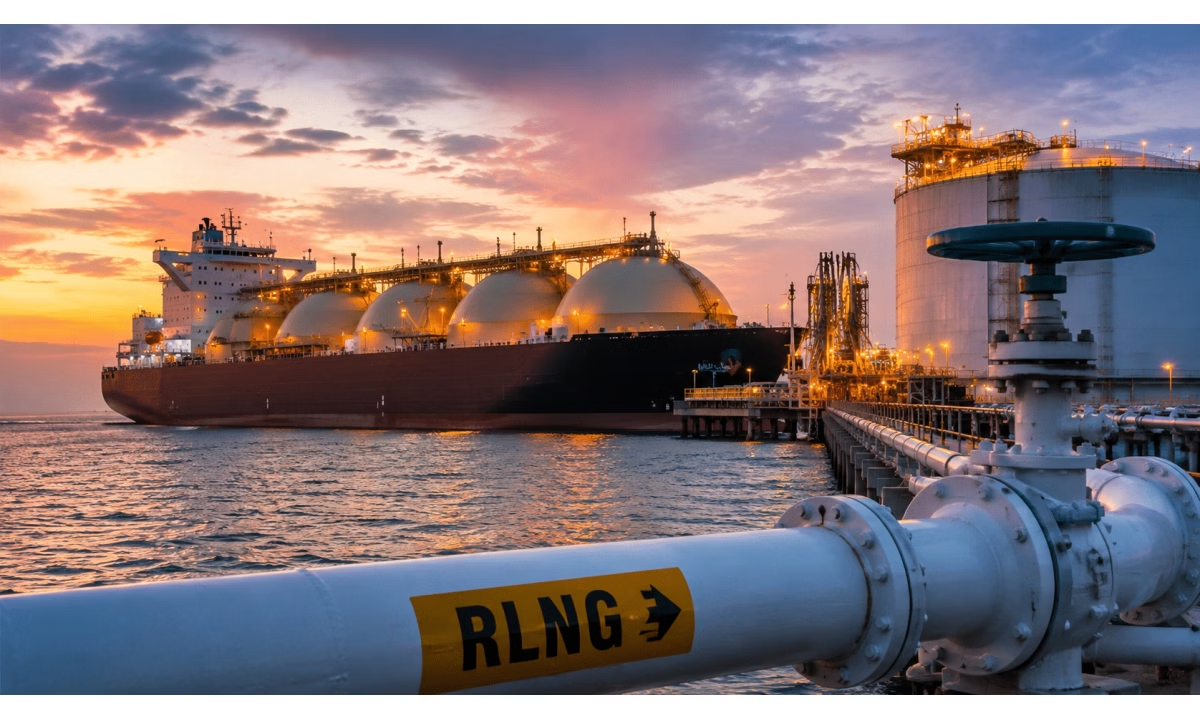
Pakistan’s regasified liquefied natural gas (RLNG) prices have climbed to their highest level in ten years after the Oil and Gas Regulatory Authority (OGRA) announced a significant increase for August. The latest revision reflects the growing pressure of expensive spot LNG imports and rising global energy market volatility.
OGRA has fixed the August RLNG price at $25.83 per mmBtu for Sui Northern Gas Pipelines Limited (SNGPL) and $25.09 per mmBtu for Sui Southern Gas Company Limited (SSGCL). At the consumer level, this translates to an estimated retail price of around Rs. 7,204 per mmBtu, making RLNG substantially more expensive for industrial, commercial, and other consumers.
The latest adjustment represents a 32 percent increase over the previous month’s price. It follows another 15 percent hike in July, meaning RLNG prices have risen sharply over two consecutive months, reaching their highest level since Pakistan began importing liquefied natural gas.
According to OGRA, the steep increase was largely driven by Pakistan’s reliance on the international spot LNG market. The country was forced to purchase five LNG cargoes at higher spot prices after scheduled shipments from Qatar could not be secured due to disruptions linked to the ongoing US-Iran conflict.
The shift from long-term contracted supplies to expensive spot market purchases significantly increased Pakistan’s import costs. Spot LNG prices are generally more volatile and tend to surge during periods of geopolitical uncertainty, supply disruptions, or increased global demand.
The latest RLNG pricing is expected to have wide-ranging economic implications. Higher gas prices increase operating costs for industries that rely on RLNG as a primary fuel source, particularly export-oriented sectors such as textiles, fertilizers, chemicals, and manufacturing. Businesses may face additional financial pressure, potentially affecting production costs and competitiveness.
Energy experts also warn that sustained increases in RLNG prices could contribute to inflation by raising transportation, manufacturing, and utility costs across multiple sectors. Consumers may eventually feel the impact through higher prices for goods and services if businesses pass on increased energy expenses.
Pakistan’s energy sector continues to face challenges stemming from international fuel price fluctuations and geopolitical developments. The dependence on imported LNG makes domestic energy prices vulnerable to external shocks, highlighting the importance of expanding indigenous energy resources, improving energy efficiency, and diversifying fuel supplies.
The government’s energy planners will closely monitor global LNG markets in the coming months as regional tensions and supply constraints continue to influence international prices. Stable long-term supply agreements and greater investment in domestic energy production may become increasingly important to reduce exposure to volatile spot markets.
With RLNG prices now at a decade-high level, businesses, policymakers, and consumers alike will be watching future market trends to assess whether energy costs begin to stabilize or remain elevated throughout the fiscal year.