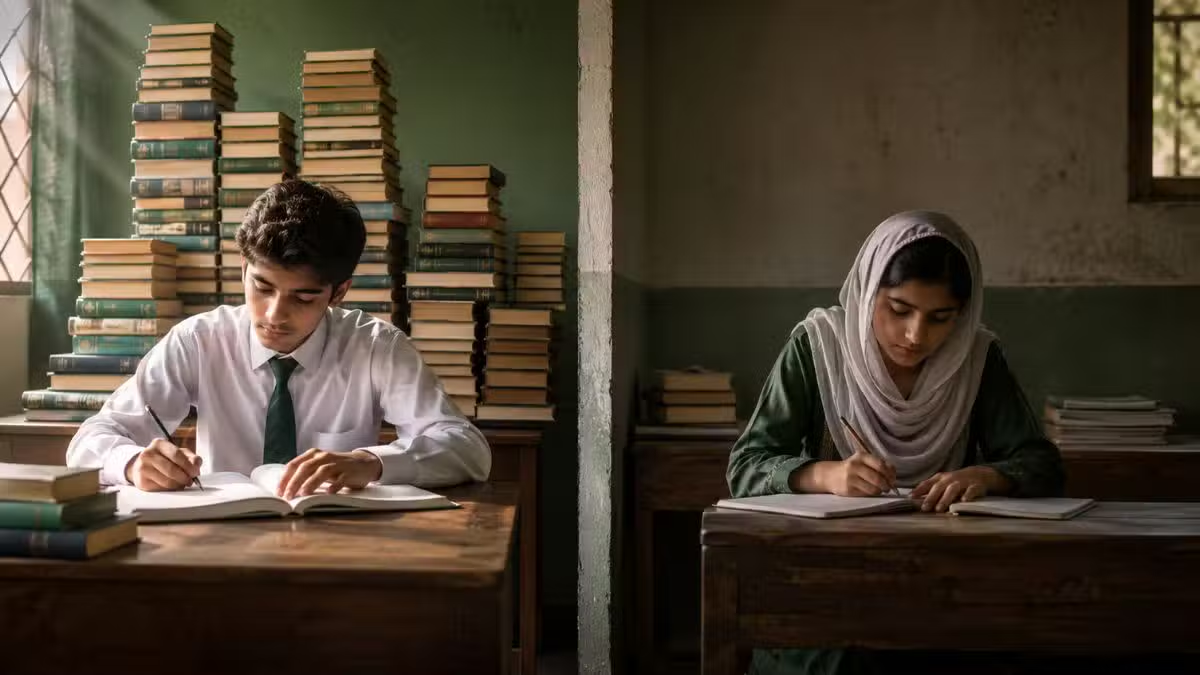
A significant gender gap in literacy continues to challenge Pakistan’s education sector, according to the Pakistan Economic Survey 2025-26. The latest data shows that the male literacy rate in the country stands at 73.0%, while female literacy remains considerably lower at 54.0%.
The statistics, derived from the 2025 Population and Housing Census, highlight the ongoing disparity between educational outcomes for men and women. Despite progress in educational access over the years, millions of women still face barriers that limit their ability to gain basic literacy skills.
The literacy gap reflects broader social and economic challenges across Pakistan. Women and girls in many regions continue to encounter obstacles such as poverty, limited access to nearby schools, transportation difficulties, and cultural factors that contribute to lower school enrollment and higher dropout rates.
Education experts note that literacy is closely linked to economic empowerment and social development. Lower literacy levels among women can reduce access to employment opportunities, higher education, digital technologies, and financial independence, affecting both individual growth and national development.
The release of the Economic Survey comes just ahead of the federal Budget 2026-27, bringing renewed attention to education policy and gender equality. Analysts believe that increased investment in girls’ education could become a major topic during budget discussions as policymakers seek solutions to narrow the literacy divide.
While the overall figures highlight persistent challenges, the survey also points to encouraging progress in digital education initiatives. The Prime Minister’s Laptop Scheme reported that female students accounted for 54% of participants as of April 2026, demonstrating that targeted programs can successfully improve educational opportunities for women.
The strong participation of women in technology-focused initiatives suggests that when access and support are provided, female students are eager to take advantage of educational resources and digital learning tools.
Experts emphasize that reducing the literacy gap will require long-term investments in schools, teacher training, transportation infrastructure, and scholarship programs aimed at supporting girls’ education. Expanding access to quality education remains essential for building a more inclusive and economically productive society.
As Pakistan works toward improving literacy rates nationwide, addressing gender disparities in education will remain a critical priority for sustainable development and future economic growth.