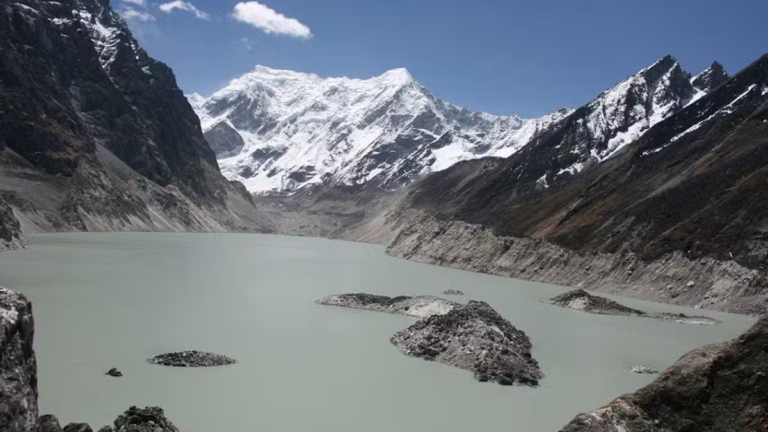
The Gilgit-Baltistan (GB) government is planning a major initiative to strengthen climate resilience by considering the establishment of a dedicated Glacier Protection Authority. The proposed body would focus on preserving the region’s nearly 700 glaciers while improving disaster preparedness and environmental management in one of Pakistan’s most climate-sensitive areas.
The proposal was discussed during a meeting between Gilgit-Baltistan Chief Minister Amjad Hussain Azar and National Disaster Management Authority (NDMA) Chairman Lt. Gen. Inam Haider Malik at the Chief Minister’s Secretariat.
The meeting centered on strategies to prepare for the upcoming monsoon season, with particular attention given to glacial lake outburst floods (GLOFs), cloudbursts, and flash floods. These natural hazards have become increasingly frequent due to rising temperatures and changing weather patterns, posing serious risks to communities living in mountainous regions.
If approved, the Glacier Protection Authority would serve as a specialized institution responsible for monitoring glaciers, coordinating conservation efforts, and supporting long-term climate adaptation policies across Gilgit-Baltistan. Officials believe such an authority could improve collaboration between provincial departments, disaster management agencies, environmental experts, and research organizations.
Gilgit-Baltistan is home to some of the world’s largest glacier systems outside the polar regions, making it a critical area for Pakistan’s freshwater resources. These glaciers feed major rivers that support agriculture, hydropower generation, and drinking water supplies for millions of people across the country.
However, climate change has accelerated glacier melting, increasing the likelihood of glacial lake outburst floods. A GLOF occurs when water trapped behind glacial ice or natural moraine dams is suddenly released, triggering destructive floods capable of damaging roads, bridges, homes, and critical infrastructure within minutes.
During the meeting, officials reviewed existing preparedness measures and emphasized the importance of early warning systems, improved coordination among government agencies, and community awareness programs. Strengthening disaster response capabilities before the peak monsoon season remains a key priority as weather-related emergencies continue to challenge northern Pakistan.
The proposed authority could also play an important role in scientific monitoring by collecting glacier data, supporting climate research, and helping policymakers make informed decisions based on environmental trends. Enhanced monitoring would allow authorities to identify high-risk glacial lakes and implement preventive measures before disasters occur.
Environmental experts have long called for dedicated institutions to oversee glacier conservation as Pakistan ranks among the countries most vulnerable to climate change despite contributing only a small share of global greenhouse gas emissions. Establishing a Glacier Protection Authority would represent another step toward building climate resilience and protecting fragile mountain ecosystems.
While the proposal is still under consideration, it signals the Gilgit-Baltistan government’s commitment to addressing climate-related threats through long-term planning, improved disaster management, and sustainable environmental protection. If implemented, the authority could become a central institution in safeguarding the region’s glaciers and enhancing the safety of communities living downstream.