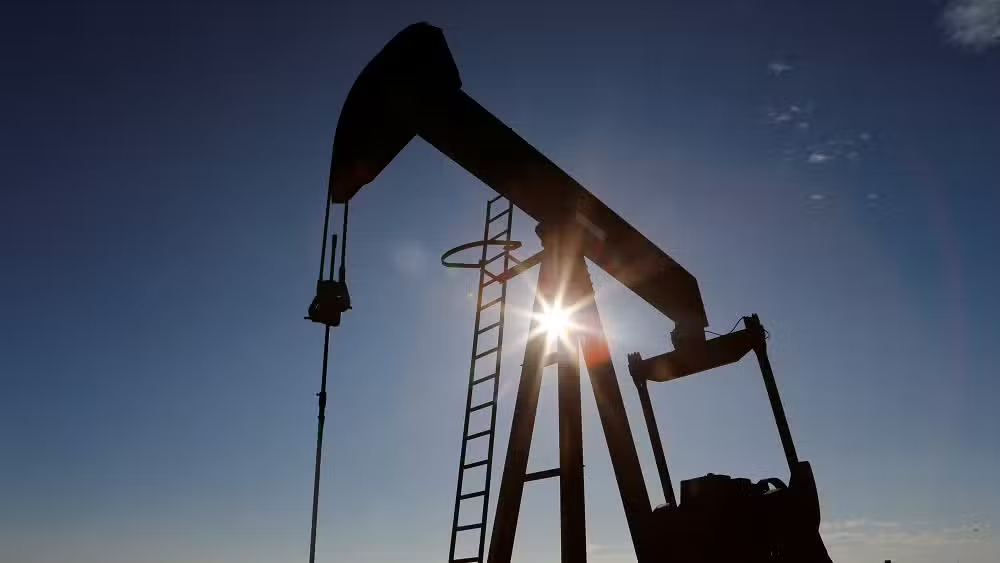
International oil prices moved closer to the $70 per barrel mark on Wednesday as global markets reacted to mixed signals surrounding potential nuclear negotiations between the United States and Iran. The uncertainty over whether diplomatic progress could lead to eased sanctions on Iranian oil exports has injected fresh volatility into energy markets.
Brent crude futures surged sharply during early trading, gaining $1.8 or around 2.6 percent to reach $69.3 per barrel. At the same time, US West Texas Intermediate crude also recorded strong gains, rising by $1.8 or 2.48 percent to trade at $64.2 per barrel.
By 6:30 PM Pakistan Standard Time, the upward momentum remained intact. Brent crude was trading at $69.1 per barrel, up 2.54 percent or $1.71 on the day. WTI crude stood at $63.94 per barrel, reflecting a 2.58 percent increase. The price action highlighted how sensitive oil markets remain to geopolitical developments and diplomatic signals.
Investors are closely monitoring discussions linked to a possible revival of a nuclear agreement, which could eventually allow Iran to increase its oil exports. Any substantial return of Iranian supply to the global market would add millions of barrels per day, potentially easing tight supply conditions. However, conflicting reports about the progress and direction of talks have left traders uncertain, resulting in sharp intraday price swings.
Beyond geopolitics, oil prices are also being supported by broader supply-demand dynamics. Global inventories remain relatively tight, while demand expectations have improved amid steady economic activity in major consuming regions. Seasonal consumption trends and ongoing production discipline by key oil-producing nations have further contributed to price stability near current levels.
Market analysts note that the psychological $70 per barrel threshold for Brent crude has become a key level for traders. A sustained break above this range could signal stronger bullish sentiment, while any negative news from diplomatic channels may trigger quick pullbacks. For now, the market appears to be pricing in caution rather than certainty.
For countries like Pakistan, movements in international oil prices carry significant implications. Higher crude prices can increase import costs, add pressure on foreign exchange reserves, and translate into higher fuel prices domestically. As a result, policymakers and consumers alike are watching global energy markets closely.
With diplomatic developments still unclear and global supply conditions finely balanced, oil prices are likely to remain volatile in the near term. Traders will continue to respond swiftly to headlines, keeping international crude benchmarks hovering near current levels until greater clarity emerges.