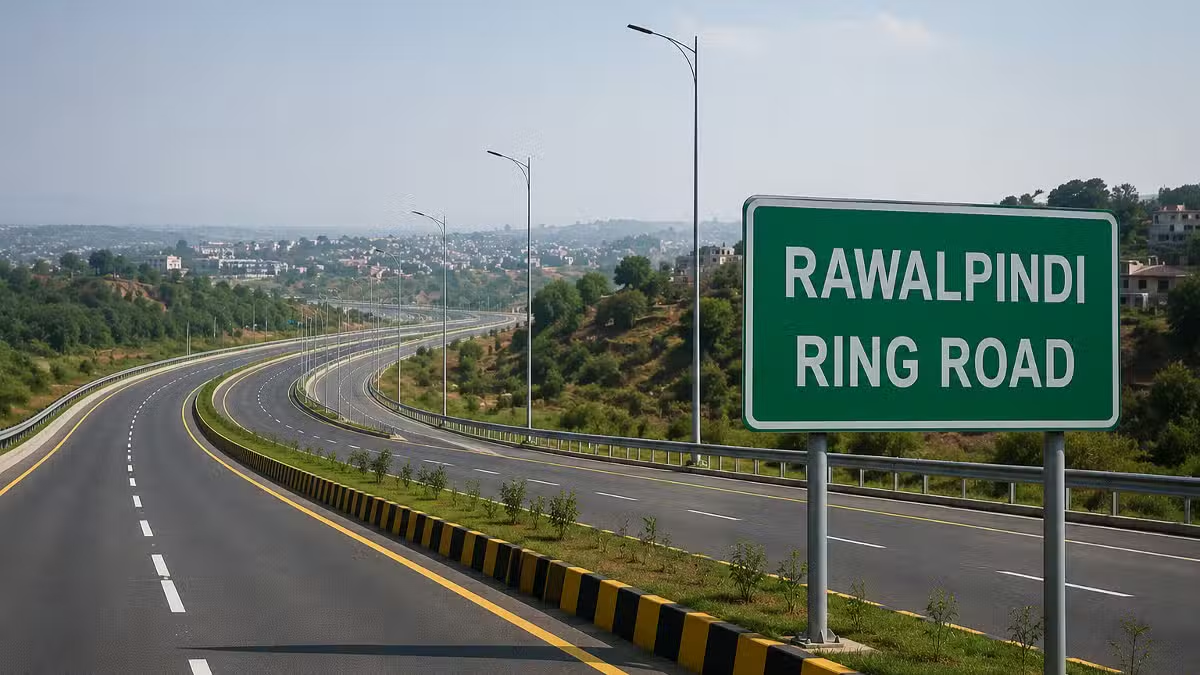
The Rawalpindi Ring Road project has missed its sixth deadline for completion and opening to traffic, raising further questions over when the long-awaited road link will become fully operational.
Despite the delay, construction on the main 38.6-kilometer route has largely been completed. The remaining work includes the installation of toll booths and ongoing construction at one of the project’s major interchanges.
The Rawalpindi Ring Road has been planned as an important transport link around the city, designed to improve connectivity between major highways and reduce pressure on existing urban roads.
The route stretches from the Banth Interchange on GT Road to the Thallian Interchange, where it connects with the motorway network. This connection is expected to provide motorists with a more efficient route between key areas around Rawalpindi.
Four of the project’s five interchanges have already been completed. These include Banth, Chak Beli Khan, Adiala and Chakri interchanges, marking significant progress on the overall road infrastructure.
However, work on the Thallian Interchange remains in progress. The interchange is now being developed under a new broad-based design, which has contributed to the delay in making the entire project operational.
The repeated failure to meet completion deadlines has added to concerns surrounding the implementation of the Rawalpindi Ring Road project. The latest missed deadline is the sixth time the project has failed to begin operations according to its scheduled timeline.
Once fully completed, the Ring Road is expected to improve traffic movement around Rawalpindi and provide better access to the motorway. It could also help divert some traffic away from congested routes within the city and surrounding areas.
The project is considered particularly important for the region because of Rawalpindi’s growing population, expanding residential areas and increasing traffic volumes. A dedicated ring road could provide an alternative route for vehicles travelling between major highways without entering heavily congested parts of the city.
The completion of most of the main route means that the project has reached an advanced stage. However, the remaining interchange work and toll infrastructure are necessary before the road can become fully operational for motorists.
The authorities will now need to complete the outstanding work and establish a clear operational timeline for the road. Further delays could continue to postpone the benefits expected from the project.
The Rawalpindi Ring Road is therefore likely to remain under close public attention as authorities work to finish the remaining components. Its eventual opening is expected to be a significant development for transportation and connectivity in Rawalpindi and the surrounding region.