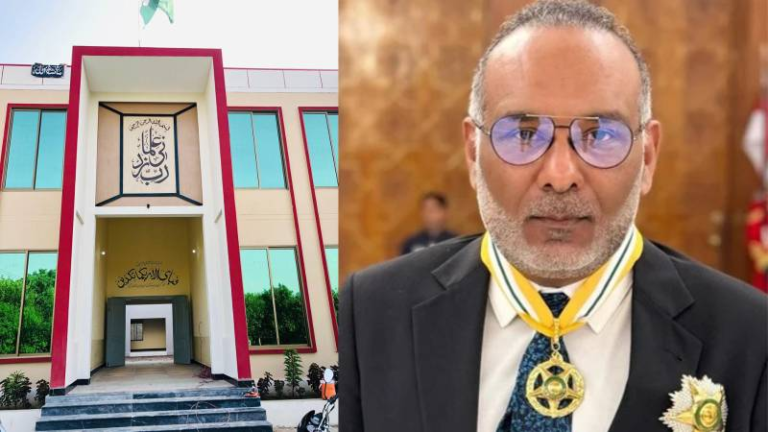
With only 23 dollars in his pocket, a determined Pakistani left his homeland for the United States, carrying little more than hope and resilience. Through years of discipline, sacrifice, and persistence, he rose to become a successful businessman and one of the most respected overseas Pakistanis of his generation.
In 2023, he captured national attention by donating nine million dollars to the National University of Science and Technology (NUST). The contribution aimed to create scholarship opportunities for underprivileged students, enabling talented youth from marginalized backgrounds to access quality education. The gesture earned widespread praise and recognition across Pakistan.
This philanthropist, Tanweer Ahmed, was acknowledged as the largest overseas Pakistani donor. During a meeting in Washington, Chief of Defence Forces Field Marshal Syed Asim Munir paid tribute to him, calling him a hero Pakistan could be proud of. The Government of Pakistan later honored him with Hilal-e-Imtiaz and Pride of Pakistan for his services toward national development and for strengthening Pakistan-US relations.
Despite these accolades, Tanweer Ahmed’s most personal dream faced relentless resistance at home. In 2020, honoring his late father’s wish, he decided to upgrade a government girls’ high school in his village Adda, Tehsil Daska, into a college. His goal was simple yet powerful: empower rural girls through education.
The project received official approval, and construction began. By February 2022, a fully equipped college building stood ready, built at a cost of Rs 85 million. It included classrooms, laboratories, offices, and even a water filtration plant. Yet, not a single class began.
Administrative obstruction, personal egos, and demands disguised as regulations stalled progress. Additional funds were extracted under vague pretenses, while approvals were deliberately delayed. Political transitions further buried the project under silence and neglect.
Even as Pakistan faces a severe education crisis, with over 25 million children out of school, this fully functional institution remained locked. Rural areas suffer the most, and provinces like Balochistan and Sindh show alarming dropout rates. The irony is stark: while the nation struggles to educate its children, a ready-made solution was left unused.
Repeated attempts to seek intervention from education officials, ministers, and provincial authorities yielded little response. Invitations were extended, meetings promised, and inaugurations announced, yet nothing materialized. By the end of 2024, the building remained closed, and the donor’s trust deeply shaken.
For Tanweer Ahmed, the pain runs deeper than personal disappointment. It reflects a systemic failure that discourages overseas Pakistanis who wish to contribute sincerely. His belief in Pakistan’s youth remains unshaken, but his experience raises an uncomfortable question.
If a globally recognized philanthropist cannot open a girls’ college in his own village despite fulfilling every requirement, what hope remains for others who wish to serve Pakistan selflessly?
This story is not just about one man. It is a reflection of how bureaucracy, corruption, and indifference can suffocate even the purest intentions, leaving philanthropy bleeding in the land it seeks to uplift.