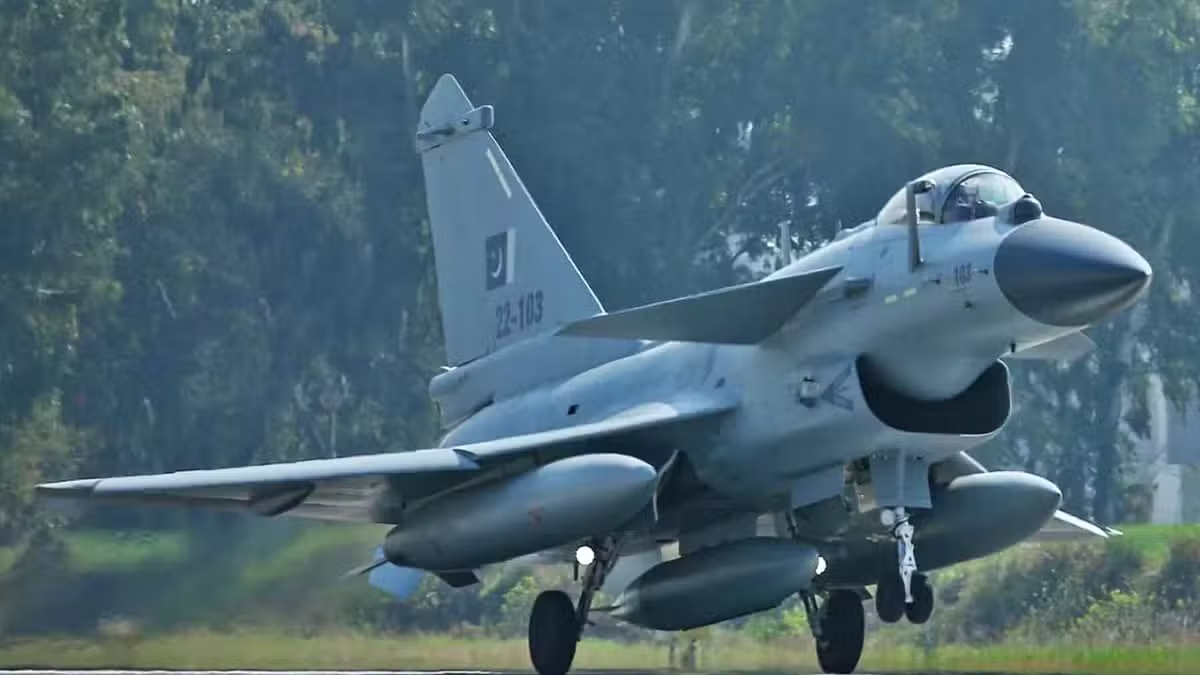
Uzbekistan has confirmed that it has joined a growing list of countries operating Chinese-made J-10CE fighter jets, becoming the second foreign country to induct the advanced aircraft into its air force.
The development marks another important step for China’s military aviation exports and strengthens Beijing’s position in the Central Asian defense market. It also highlights the growing international interest in Chinese fighter aircraft.
The J-10CE is an export version of China’s J-10C multirole fighter. The aircraft is designed for both air-to-air and air-to-ground missions and incorporates modern avionics, radar and weapons capabilities.
Uzbekistan’s acquisition had been the subject of reports for some time. Earlier reports indicated that Tashkent had ordered 24 J-10CE fighter jets from China, although neither the Chinese nor Uzbek governments had officially confirmed the reported purchase.
That changed after footage released by the Uzbek president’s office showed at least six J-10CE fighters taking part in independence day celebrations.
The appearance of the aircraft provides the clearest public indication so far that Uzbekistan has received the Chinese fighter jets. It also makes Uzbekistan the second foreign operator of the J-10CE, following Pakistan.
Pakistan has been an important international customer for China’s J-10C family. The Pakistan Air Force operates the aircraft under the J-10CE designation, making the fighter an established part of China’s growing export portfolio.
The Uzbek acquisition could have wider implications for the regional defense landscape. Central Asia has traditionally maintained military relationships with Russia, but countries in the region have increasingly explored diversified defense partnerships and equipment suppliers.
China has been expanding its economic, diplomatic and security engagement across Central Asia. The reported J-10CE acquisition adds a significant military dimension to Beijing’s growing relationship with Uzbekistan.
For Uzbekistan, modern fighter aircraft can play an important role in strengthening air-defense and air-combat capabilities. The introduction of the J-10CE could also represent a move toward modernizing parts of the country’s aging combat aircraft fleet.
The J-10CE is based on the J-10C, a fourth-generation-plus fighter developed by China. Its modern systems are intended to improve situational awareness, air combat performance and precision-strike capabilities compared with older-generation aircraft.
China’s expanding fighter exports also demonstrate Beijing’s increasing ability to compete in the international combat-aircraft market. The J-10CE provides countries with an alternative to Western and Russian fighter platforms.
Uzbekistan’s confirmation is therefore significant beyond the number of aircraft involved. The move demonstrates that Chinese military aviation products are gaining visibility among countries that have historically relied heavily on Russian defense equipment.
The development will likely attract attention across Central Asia and among defense analysts monitoring China’s growing military and strategic influence in the region.
With Uzbekistan now confirmed as another J-10CE operator, China has strengthened the aircraft’s international footprint and added another high-profile customer to its expanding defense export market.