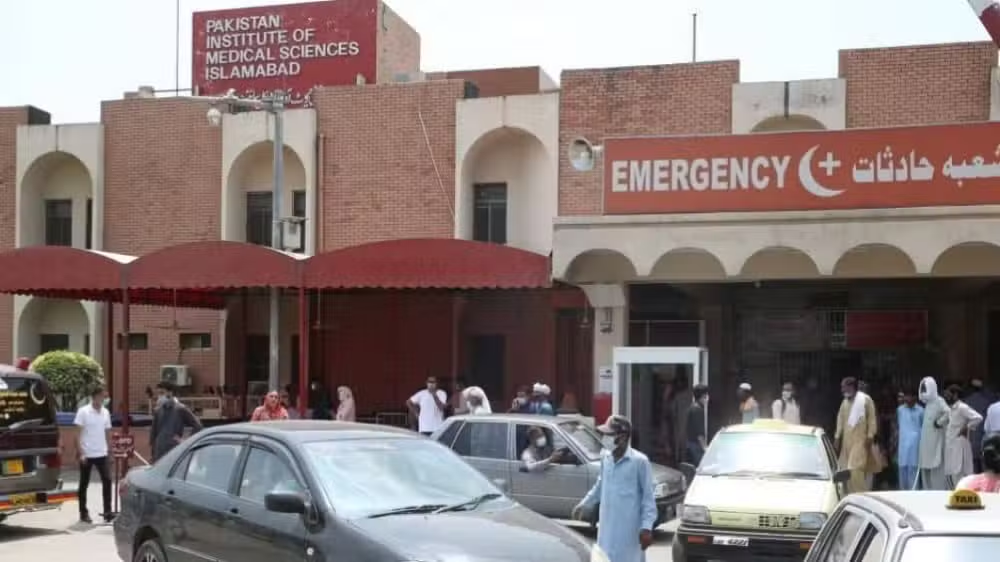
The Pakistan Institute of Medical Sciences (PIMS) has recorded significant gaps in its recent performance assessment, meeting only 39.7 percent of the indicators reviewed during an institutional audit.
According to the assessment, PIMS failed to meet around 60 percent of the performance indicators, well below the acceptable compliance benchmark of 90 percent.
The findings have raised concerns about the hospital’s operational standards and the need for timely improvements across several areas.
Following the audit findings, Prime Minister Shehbaz Sharif directed relevant authorities to complete a set of short-term measures aimed at improving PIMS within the next three months.
Fire safety has been identified as one of the areas requiring attention. Authorities have been instructed to improve the hospital’s fire safety arrangements as part of the immediate measures.
The directions also cover other aspects of hospital operations, with the objective of strengthening services and addressing shortcomings identified through the performance assessment.
PIMS is one of Pakistan’s major public-sector healthcare institutions, providing medical services to patients and serving as an important teaching and training facility.
The performance audit provides an assessment of how the institution is meeting defined operational indicators. The 39.7 percent compliance figure indicates that substantial work remains to reach the 90 percent target.
The three-month timeframe set for short-term measures places emphasis on addressing issues that can be tackled without waiting for longer-term reforms.
Fire safety is particularly important in a large healthcare facility, where patients, medical staff and visitors may face additional risks during an emergency. Effective safety systems and clear emergency procedures are therefore an important part of hospital operations.
The government’s instructions also point to the need for broader operational improvements at PIMS. Addressing multiple areas identified in the audit could help the institution move closer to the required performance standards.
The audit results may also serve as a basis for monitoring progress over the coming months. Regular assessments can help authorities determine whether the required corrective measures are being implemented effectively.
For patients and healthcare workers, improvements in hospital management, safety systems and operational procedures can directly affect the overall hospital environment.
The latest developments place PIMS under a focused improvement process, with authorities expected to work on the identified shortcomings within the specified three-month period.
Further progress will depend on how effectively the hospital administration and relevant authorities implement the required measures and address the indicators where compliance remains below the established target.