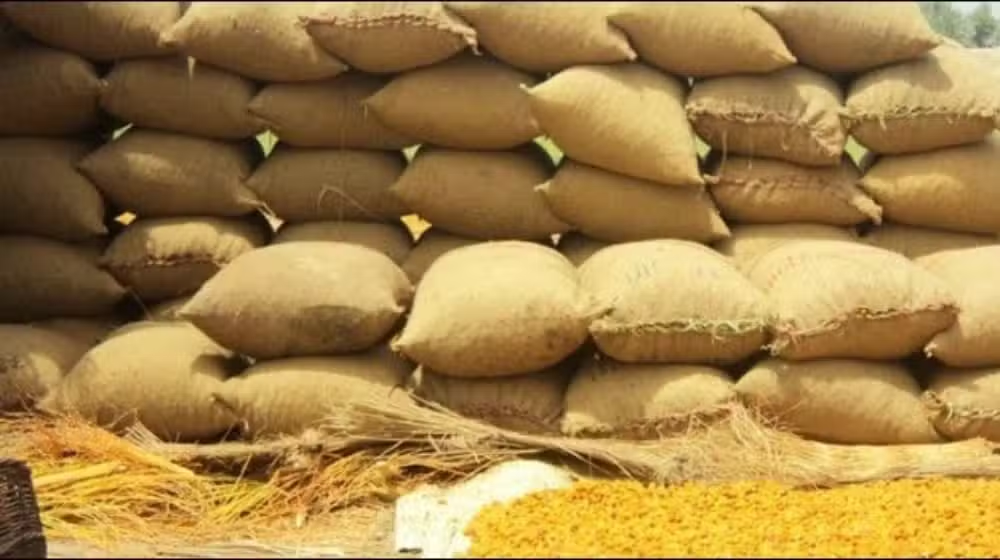
A serious governance and accountability crisis has emerged in Sindh after officials confirmed that tens of thousands of wheat bags have gone missing from a government warehouse in Jamshoro district. The discovery has triggered an anti-corruption investigation and raised fresh concerns about mismanagement and alleged bribery within the provincial food supply system.
Authorities revealed that approximately 64,000 wheat sacks were unaccounted for at the Bolhari warehouse, a key storage facility responsible for safeguarding government wheat reserves. The missing stock came to light during an internal review, prompting immediate action from oversight bodies.
Following the discovery, the Anti-Corruption Department registered a formal case against three warehouse employees. Investigators have launched a detailed inquiry to determine how such a large quantity of wheat disappeared without timely detection, and whether the loss was the result of negligence, theft, or organized corruption.
As the investigation unfolds, officials within the Sindh Food Department have reportedly begun shifting blame onto one another. Sources suggest that internal disagreements and lack of oversight may have contributed to delays in identifying the missing stock, allowing the situation to escalate into a full-scale scandal.
Former warehouse in-charge Ali Raza Brohi has come under scrutiny after allegations surfaced that he demanded bribes in exchange for facilitating wheat storage and movement. These claims have intensified public anger, as wheat is a critical commodity linked directly to food security and price stability in the province.
In addition, Deputy Director of Food Qamar-ud-Din Memon is facing serious accusations of seeking millions of rupees in kickbacks. Investigators are examining financial records and official approvals to determine whether senior officials were complicit or turned a blind eye to irregularities at the warehouse.
The missing wheat bags have sparked concerns about potential losses to the public exchequer and their impact on flour prices. Experts warn that corruption in wheat procurement and storage systems can directly affect market supply, leading to artificial shortages and higher costs for consumers.
This incident has once again highlighted long-standing weaknesses in Sindh’s food management infrastructure. Poor record-keeping, limited digital tracking, and inadequate audits have repeatedly been flagged by watchdogs as factors enabling corruption and pilferage.
Anti-corruption officials have stated that no one involved will be spared, regardless of rank or position. They have also indicated that the investigation may expand to include contractors, transporters, and supervisory staff if evidence points to a wider network.
The provincial government is under growing pressure to ensure transparency and accountability in the handling of essential commodities. Civil society groups and opposition leaders are demanding swift action, recovery of losses, and structural reforms to prevent similar incidents in the future.
As the probe continues, the wheat scandal serves as a stark reminder of the urgent need for stronger oversight mechanisms to protect public resources and ensure food security for millions across Sindh.