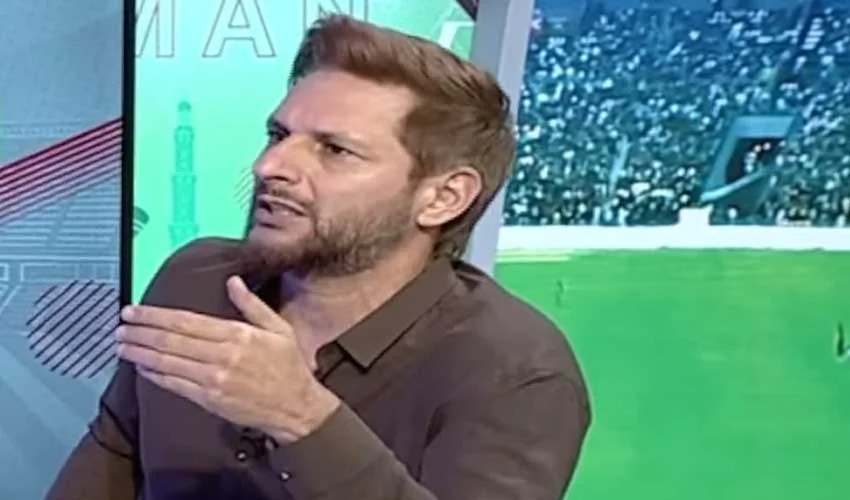
Former Pakistan captain and all-rounder Shahid Khan Afridi has publicly supported the Pakistan government’s decision to boycott the highly anticipated match against India in the ICC Men’s T20 World Cup 2026. The fixture was scheduled to take place on February 15, but growing political tensions have cast uncertainty over one of cricket’s biggest rivalries.
In a statement shared on X, formerly known as Twitter, Afridi described the situation as unfortunate for cricket fans while firmly standing by the government’s stance. He emphasized that while politics often creates divisions, cricket has historically served as a bridge between nations. Despite this belief, Afridi said he supports Pakistan’s decision at this critical moment.
Afridi also called on the International Cricket Council to demonstrate leadership rather than limiting itself to neutral statements. According to him, neutrality should be reflected through decisive actions, especially when the sport’s integrity and spirit are at stake. His remarks underline growing expectations from the ICC to play a more proactive role in managing politically sensitive situations involving member nations.
The former all-rounder acknowledged that the absence of a Pakistan versus India clash is a major loss for global cricket. Matches between the two sides draw massive audiences worldwide and are often seen as marquee events of any ICC tournament. However, Afridi maintained that national decisions must be respected, even when they come at the cost of sporting spectacle.
Afridi’s comments come amid a wider debate within the cricketing community. Earlier, former Pakistan all-rounder and T20I captain Mohammad Hafeez also reacted to the boycott decision. Hafeez recalled India’s refusal to shake hands with Pakistan players during the Asia Cup, suggesting that Pakistan’s withdrawal from the World Cup match was a response to earlier actions. He described the situation as far from ideal for cricket fans who look forward to contests between the two rivals.
The controversy has not remained limited to Pakistan alone. In India, senior lawmaker and author Shashi Tharoor criticized the increasing politicisation of cricket, calling it disgraceful and harmful to the sport’s unifying spirit. Speaking on the issue, Tharoor warned that political interference risks damaging cricket’s global image and its ability to bring people together beyond borders.
Tharoor also referenced broader implications of political tensions on players, noting that Bangladeshi cricketer Mustafizur Rahman should not have faced consequences regarding his Indian Premier League contract amid diplomatic strains. His remarks added another dimension to the debate, highlighting how political decisions can directly affect athletes and professional leagues.
As discussions continue, the focus remains on the ICC’s response and whether it will take concrete steps to address concerns raised by former players and political figures. The Pakistan-India rivalry, long considered the centerpiece of international cricket, now finds itself once again at the intersection of sport and politics.