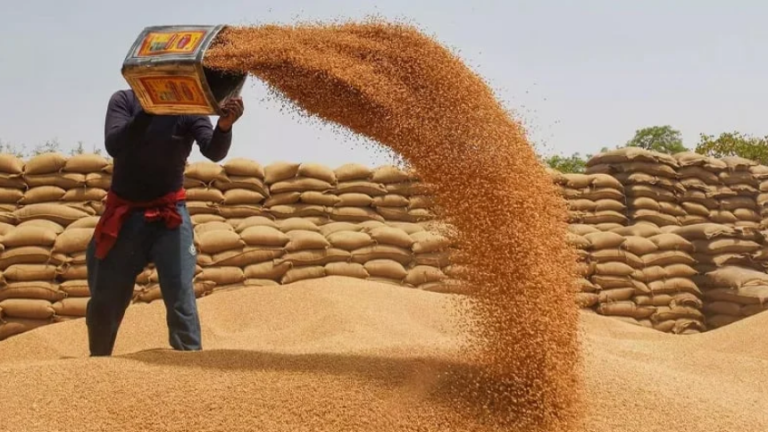
Pakistan’s federal government has decided to withdraw from the wheat procurement process, marking a major shift in the country’s agricultural and food security policy. The move comes under pressure from the International Monetary Fund (IMF) as part of broader economic reforms aimed at reducing fiscal burdens and market distortions.
According to official sources, both the federal and provincial governments will now retain only emergency wheat reserves instead of engaging in large-scale procurement. In total, 6.2 million metric tonnes of wheat will be held nationwide as strategic stocks to meet emergency needs during shortages or supply disruptions.
Under the new arrangement, the federal government will retain 1.5 million metric tonnes of wheat. Punjab will hold 2.5 million tonnes, Sindh 1 million tonnes, Khyber Pakhtunkhwa 750,000 tonnes, and Balochistan 500,000 tonnes. These quantities are intended solely for emergency use rather than routine market intervention.
A significant aspect of the policy shift is the transfer of responsibility for purchasing strategic wheat reserves from the government to the private sector. A designated private company will handle wheat procurement, financing, and storage. The federal government will only pay service charges instead of directly funding purchases.
Sources in the Ministry of Industries and Production said this transition is expected to generate substantial fiscal savings. The government estimates annual savings of around Rs570 billion by exiting direct wheat procurement. To support the new system, the Ministry of National Food Security has allocated Rs30 billion for service charges payable to the private company.
Another major change is the removal of subsidies linked to the wheat support price. The IMF has barred the federal government from fixing a support price for wheat. Going forward, wheat prices will be aligned with international market trends rather than being administratively set.
The Ministry of National Food Security will oversee price determination while keeping global benchmarks in view. This approach is intended to encourage market efficiency and reduce the financial strain caused by price controls and subsidies.
Previously, the federal government provided bank guarantees for wheat procurement, and the Pakistan Agricultural Storage and Services Corporation (PASSCO) carried out purchases. However, delays in payments to PASSCO contributed to circular debt in the food sector, which has reportedly reached Rs270 billion.
Officials believe the new framework will help address longstanding inefficiencies in the wheat supply chain while limiting government exposure to financial risk. However, the decision has also raised concerns among farmers and stakeholders about price volatility and income stability in the absence of a support price.
As Pakistan continues negotiations with the IMF, the withdrawal from wheat procurement reflects a broader push toward market-driven reforms. The long-term impact of this policy will depend on effective regulation, transparent pricing mechanisms, and safeguards to ensure food security for vulnerable populations.